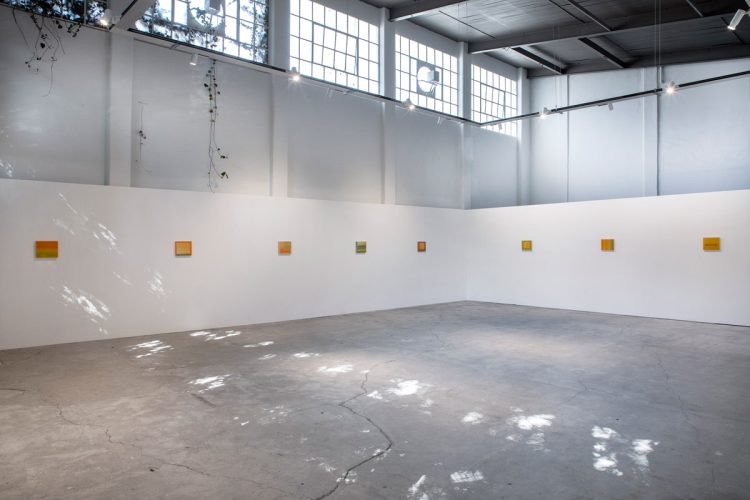
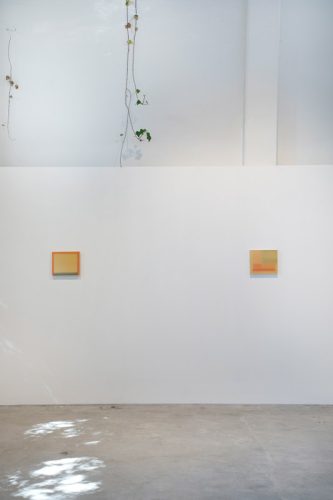
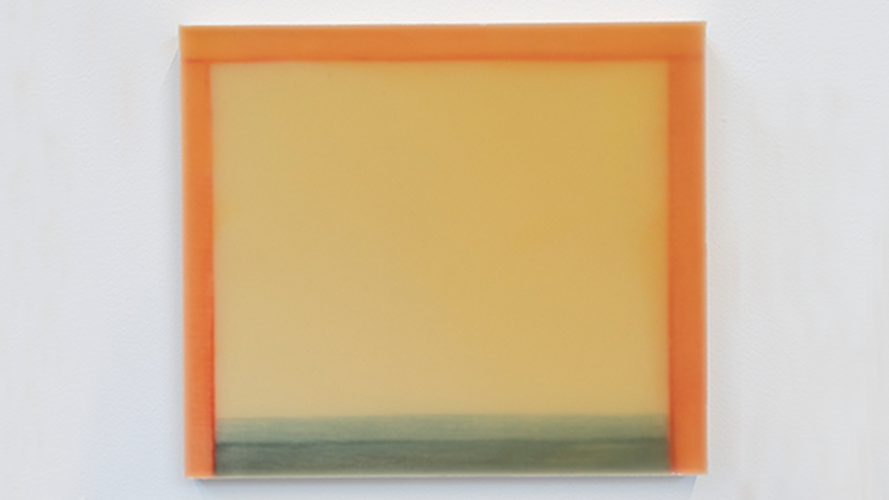
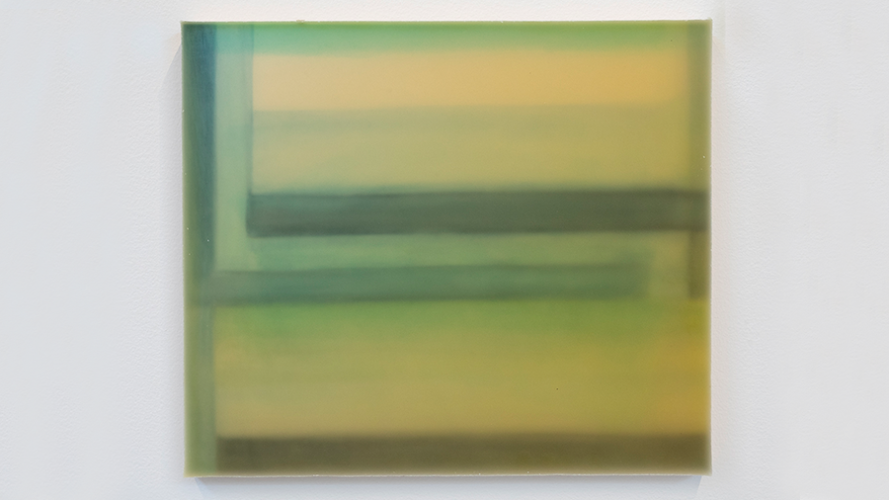
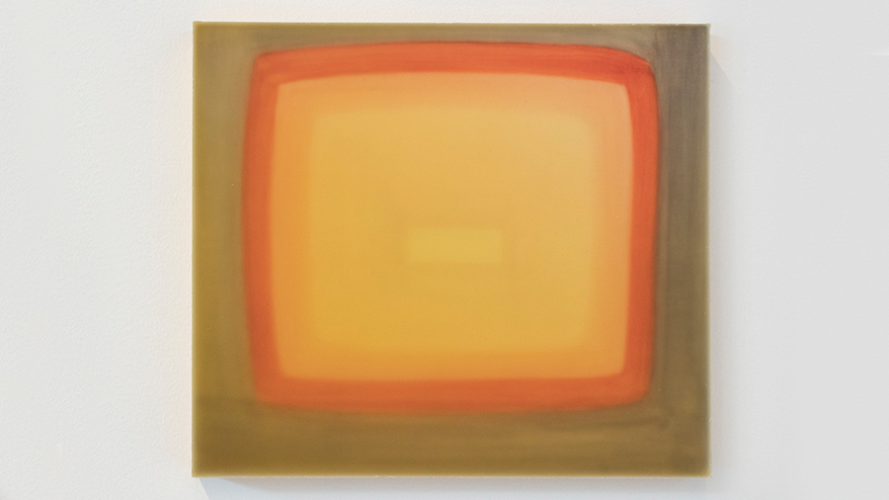
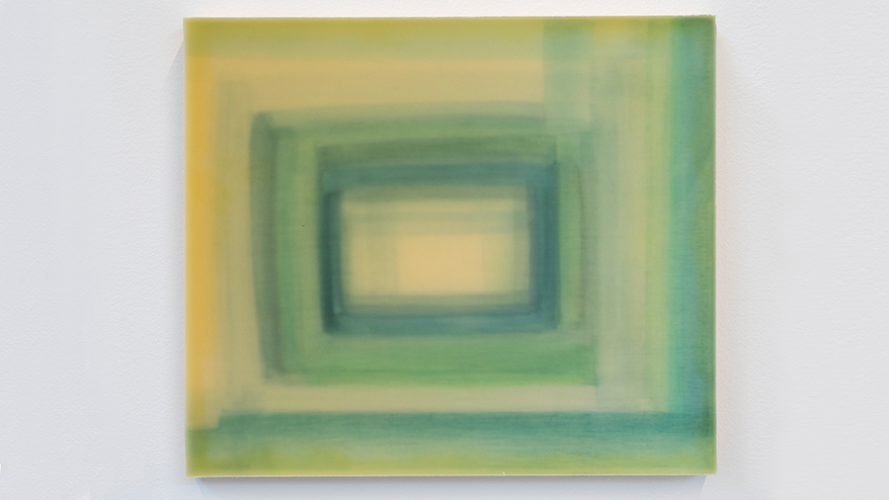

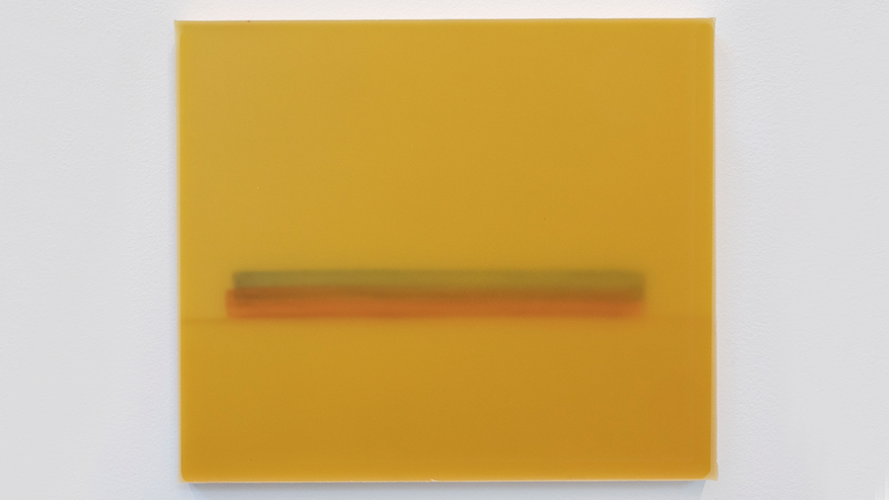
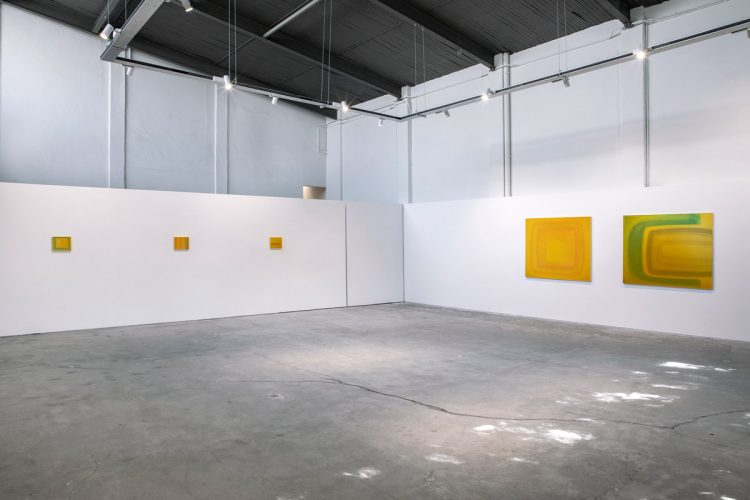
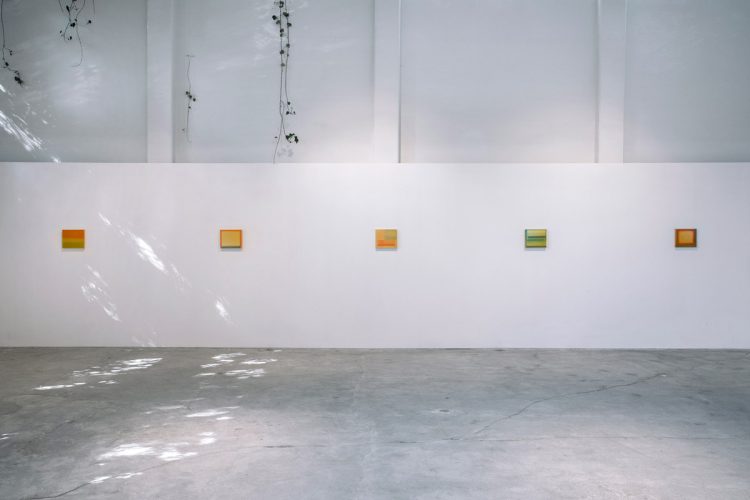
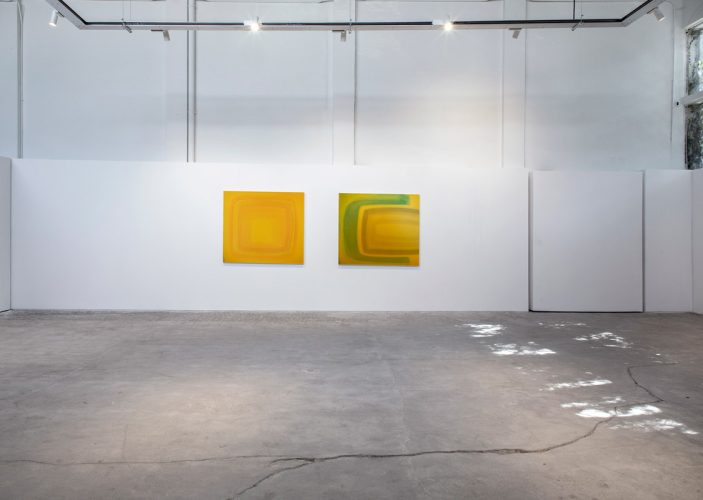
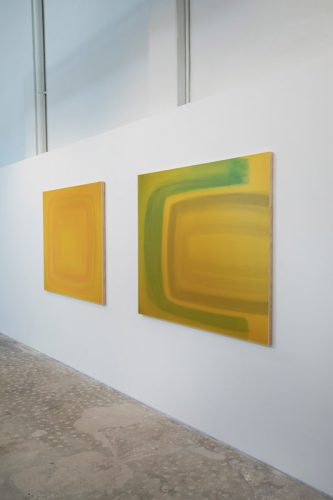
On the surface Manuela García. On The Surface comprises a set of nine small-scale and two large-scale works that examine the logics of the painterly surface. Composed of soft brushstrokes in different shades of red and blue, which together animate fragmented geometric shapes, the surfaces of García’s work possess an allure that is however subdued by the use of beeswax top coating. This material gesture produces an attentiveness to the artifice that is the surface. This is done not merely by making the surface coincide with the background but through an imaginative and deliberate act of interruption: where the wax coating takes the viewer away from the surface by creating an apparent depth in the painting, it simultaneously brings them closer, through revealing the surface for what it is—a tangible structure that has length and breadth but no thickness. In this way, García defies the tendency towards pure forms of visuality—with which Modernism in painting has been identified—while delivering a succinct and playful reflection on the production of the picture surface. In her attempts to develop new ways of thinking about and engaging with the problem of the pictorial surface, García also prompts an unconventional and sensuous experience of painting. The semi translucent and frail wax surfaces/skins grant the underlying geometric forms an ethereal quality, pushing them towards the threshold of in-visibility. The forms appear both revealed and concealed; they seem to exist somewhere between what we can perceive and what we cannot fully know. The uncanny and visceral nature of García’s work activates in the viewer a different form of relating to painting. Invoking intense sensations and physical states, the work expands the parameters of what hapticality can mean for the experience of an apparently visual art such as painting. In García’s work painting becomes an event more than a cultural object.
En su intento por desarrollar nuevas maneras para pensar e implicarse con el problema de la superficie pictórica, García también provoca una experiencia no convencional y sensible de la pintura. Las superficies/pieles casi translúcidas y frágiles dan a las formas geométricas que les subyacen una cualidad etérea, lo que las lleva más allá del umbral de la in-visibilidad. Las formas se revelan tanto como se ocultan; parecen existir en algún lugar entre lo que podemos percibir y lo que no podemos conocer en su totalidad. La naturaleza visceral e insólita de la obra de García despierta en el espectador una forma distinta de relacionarse con la pintura. Al invocar sensaciones y estados físicos intensos, la obra expande los parámetros de lo que puede significar lo háptico para la experiencia de un arte supuestamente visual como la pintura. En la obra de García, la pintura se vuelve un acontecimiento en lugar de ser un objeto cultural